
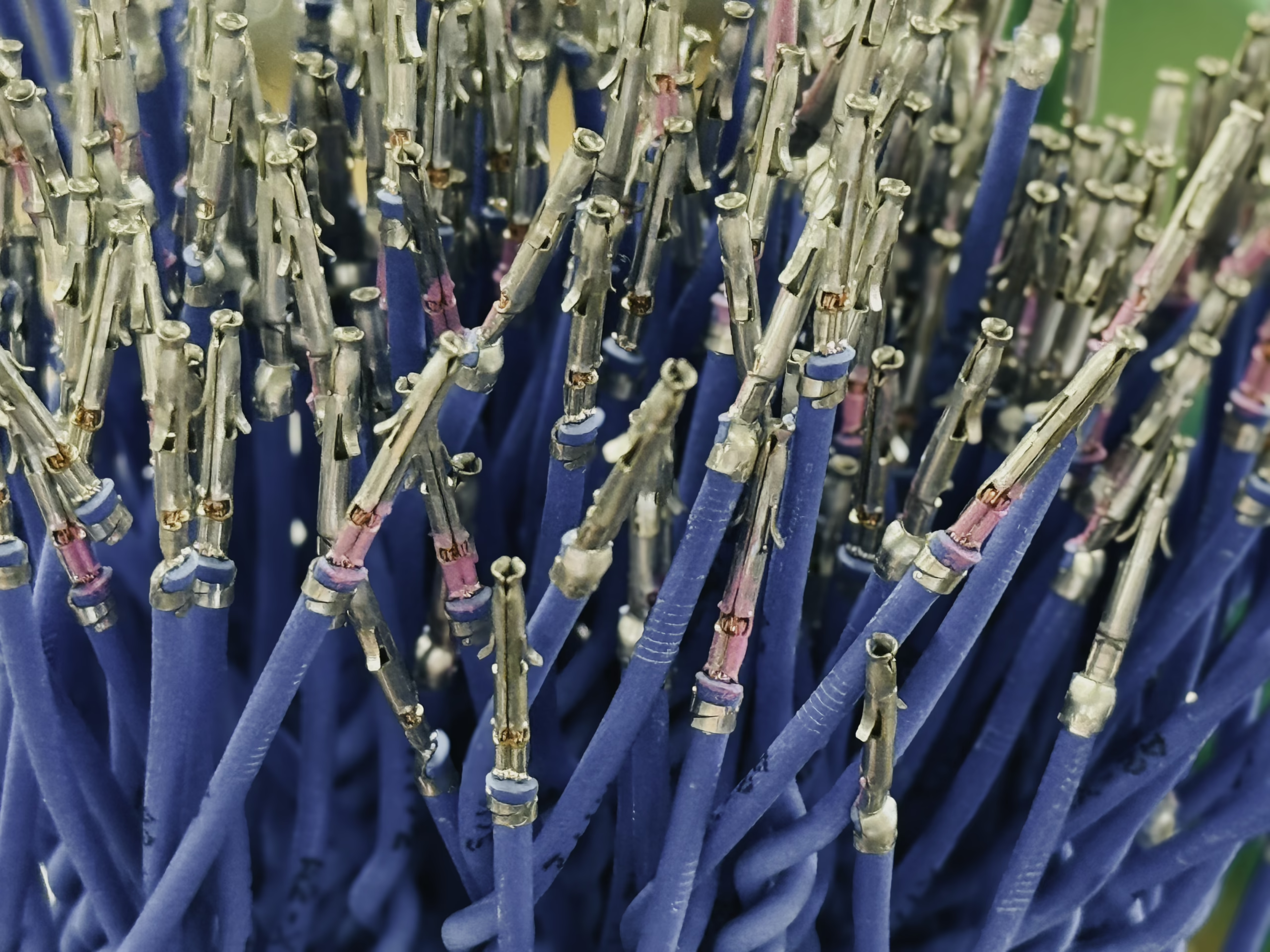
Crimping cables – durable and repeatable connections
We use mechanical, pneumatic and hydraulic presses.
We select the clamping technology for a specific connector and cable cross-section,
and equip our stations with clamping force analysis for full quality control.
Choosing the right technology and accessories for your connector
We have an extensive database of applicators for many types of tips. For special projects, we order dedicated tools to ensure repeatable and compliant clamping.
For prototypes and small series, we use manual and semi-automatic tools; for higher volumes – pneumatic presses and automated stations. For large cross-sections and high forces – hydraulic presses.
- Supported cable cross-section in the crimp: up to 300 mm²
- Clamping force analysis and cycle monitoring
- 1- and 2-sided crimping configurations
PROCESS AND POSSIBILITIES
Cross-sections and geometries
Selection of dies and crimping parameters for connector type and cable cross-section – up to 300 mm².
Different types of presses
Mechanical, pneumatic and hydraulic – from workshop stations to automated lines.
Process control
Clamping force analysers and dimensional verification – real-time deviation detection.
How we carry out crimping
We combine press stations with appropriate applicators and clamping force control. We handle high volumes on pneumatic and hydraulic presses, and prototypes and short series on manual and semi-automatic stations.
Crimping equipment
Presses and crimping equipment – overview
A complete set of presses for various types of ends and cross-sections – from workshop work to series production. For large cross-sections and high forces, we use hydraulic presses with interchangeable dies.
Models used at workstations
Depending on the project requirements, we use, among others: WDT UP 35, WDT SSC-2 FP,
Wirmec WSC 15 (stripper crimper) , P-BHD-400, AH-400 / AH-400 F3,
T-12, 3K/40, 964, P-100,
as well as hand tools Lumberg IDC.

Process integrations
Hitachi UX-D (black ink)
marking cables and wires on the fly
Hitachi UX-P (white ink)
marking cables and wires on the fly
IDC connectors – without pre-stripping
IDC (Insulation Displacement Connection) does not require pre-stripping.
During crimping, the insulation is displaced and electrical contact is made directly on the conductor.
A quick and economical solution for ribbon cables and multi-wire connections.
- Shorter cycle time and high repeatability
- Lower risk of vein damage
- Attractive cost for larger volumes
Clamp quality control
Monitorujemy profil siły zacisku i parametry procesu, prowadzimy próby destrukcyjne
i audyty wymiarowe. Każde połączenie jest weryfikowane pod kątem elektrycznym i mechanicznym.
Analiza siły w cyklu
Próby destrukcyjne
Audyt parametrów i matryc
Force analysis in the cycle
Audit of parameters and matrices
Destructive testing
RELATED PROCESSES
Cutting and processing of cables
Cut & strip single and multi-core cables, marking on the fly.
Whitewashing and soldering
Prepare the ends and solder them according to the application requirements.
Welding the joint
Low resistance, long service life – an alternative to mechanical connections.
Do you have the wiring documentation?
Do you require a crimping process for your project?
We will select the press, applicator and clamping parameters – from prototype to series production.
Related services and pages
Explore the topics that users most often continue with at this stage.
Wire end processing
Continue →IDC connectors
Continue →Joint welding (ultrasonic)
Continue →Whitewashing and soldering wires
Continue →Would you like to discuss your project?
We will help you choose the right scope of cooperation.