
Whitewashing and soldering wires
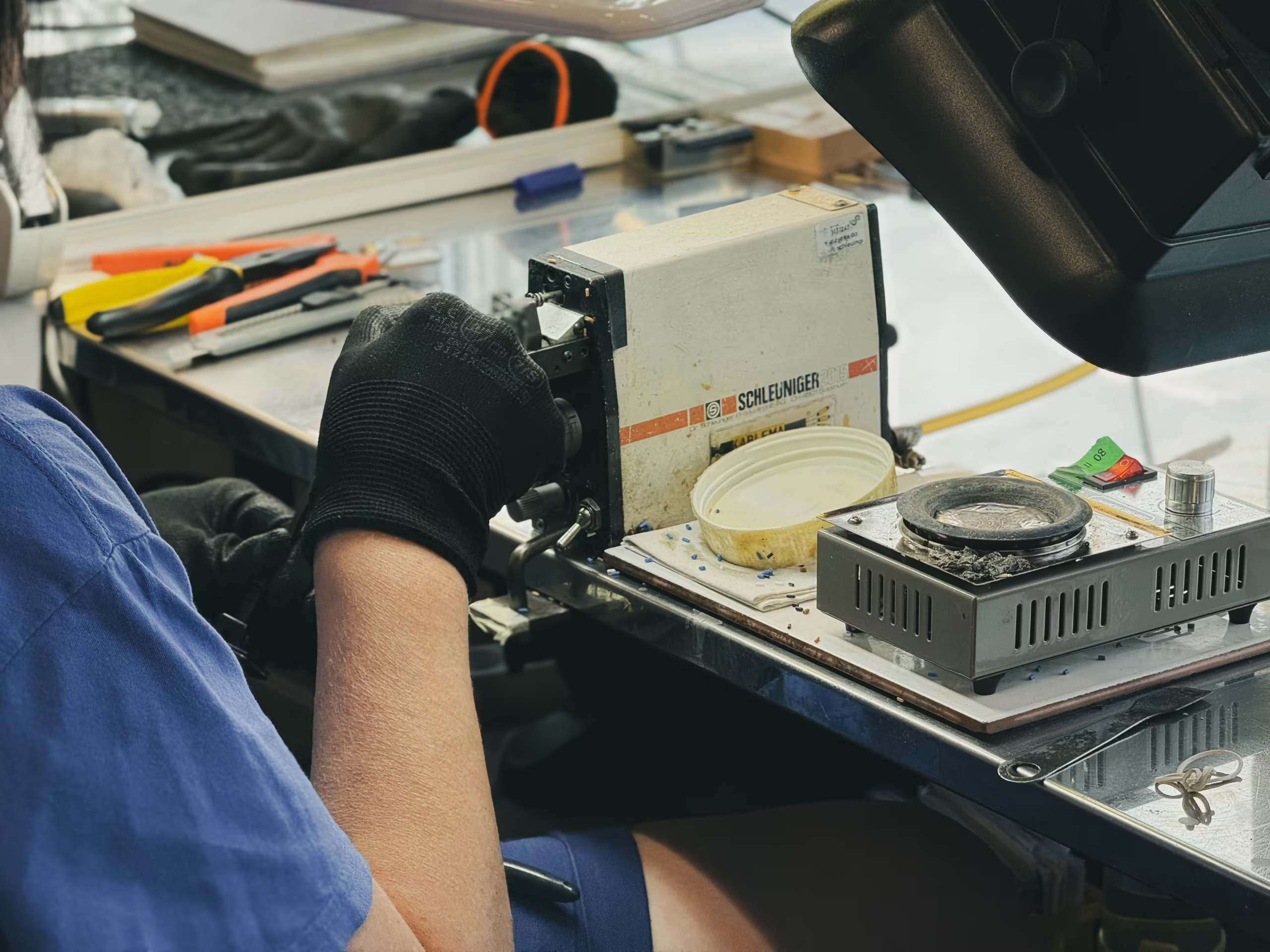
We prepare cable ends for assembly (stripping) and make permanent soldered connections in accordance with the project requirements. This increases electrical reliability, protects against oxidation and speeds up further assembly.
What’s the purpose of tin dipping if soldering is used?
Tin dipping stabilizes the end of the stranded wire (prevents conductor separation) and facilitates further connections – both in connectors and on solder pads. Soldering is used where a reliable and durable electrical and mechanical connection is required, in accordance with design specifications.
These processes are carried out on both automated lines and manual workstations: Komax Gamma 333 PC, Wirmec AM 300 Quattro, solder pots, and ERS soldering stations – with parameters adjusted to the material and cross-section.
- Faster assembly and consistent wire end quality
- Protection against oxidation of the exposed conductor
- Dimensional consistency and improved wetting during soldering
APPLICATIONS AND BENEFITS
Consistent electrical contact
A tinned wire end and properly executed solder joint ensure low resistance and connection reliability.
Wire conductor protection
The solder layer protects the wire end against oxidation and mechanical damage.
Szybszy montaż
Powtarzalny kształt i zwilżalność końcówki skracają czas montażu kolejnych etapów.
How we carry out whitewashing and soldering
Depending on the volume and type of cables, we combine cut & strip machines with tinning modules and manual stations: compact crucibles and ERS soldering stations. We select the temperature, time and flux for each material and cross-section.
Whitewashing and soldering
Manual stations: crucibles and ERS stations
For prototypes and individual tasks, we use manual soldering irons and ERS soldering stations. They allow us to precisely select process parameters and quickly respond to design changes.
Vending machines with a whitening module
Selected machine configurations enable end whitening immediately after cut & strip operations. This guarantees dimensional consistency and work pace for production series.
Parameters and materials
- Selection of flux and temperature for core and insulation material
- Controlled length of soldering and solder volume
- Protecting the ends from oxidation and delamination
- Dimensional repeatability for production series
Quality control of tinning and soldering
We verify the wettability, filling and geometry of the joint, and conduct visual inspections and mechanical tests on samples. The process parameters are documented and auditable.
Microscopic inspection
Process parameter cards
Mechanical tests (samples)
Let us handle this process for you.
Take advantage of our offer covering this stage of production and receive full technological support.
Soldering and tinning
Tinning wire ends – durable and resistant low-resistance connections.
Do you have the wiring documentation?
Do you have questions about whitewashing or soldering?
We will select the technology and parameters for your project – from prototypes to production series.
Related services and pages
Explore the topics that users most often continue with at this stage.
Wire end processing
Continue →Crimping cables
Continue →IDC connectors
Continue →Joint welding (ultrasonic)
Continue →Would you like to discuss your project?
We will help you choose the right scope of cooperation: website, SEO, branding or lead generation.